


CNC Robot vs CNC Machine: Whats the Difference?
CNC ROBOT VS CNC MACHINE: WHAT'S THE DIFFERENCE?
A CNC machine and a CNC robot both remove material using a cutting tool driven by a programmed path. Beyond that, the two systems work quite differently, how they move, what they can produce and what they cost to own and operate. For manufacturers weighing up which route makes sense for their application, the comparison is worth working through.
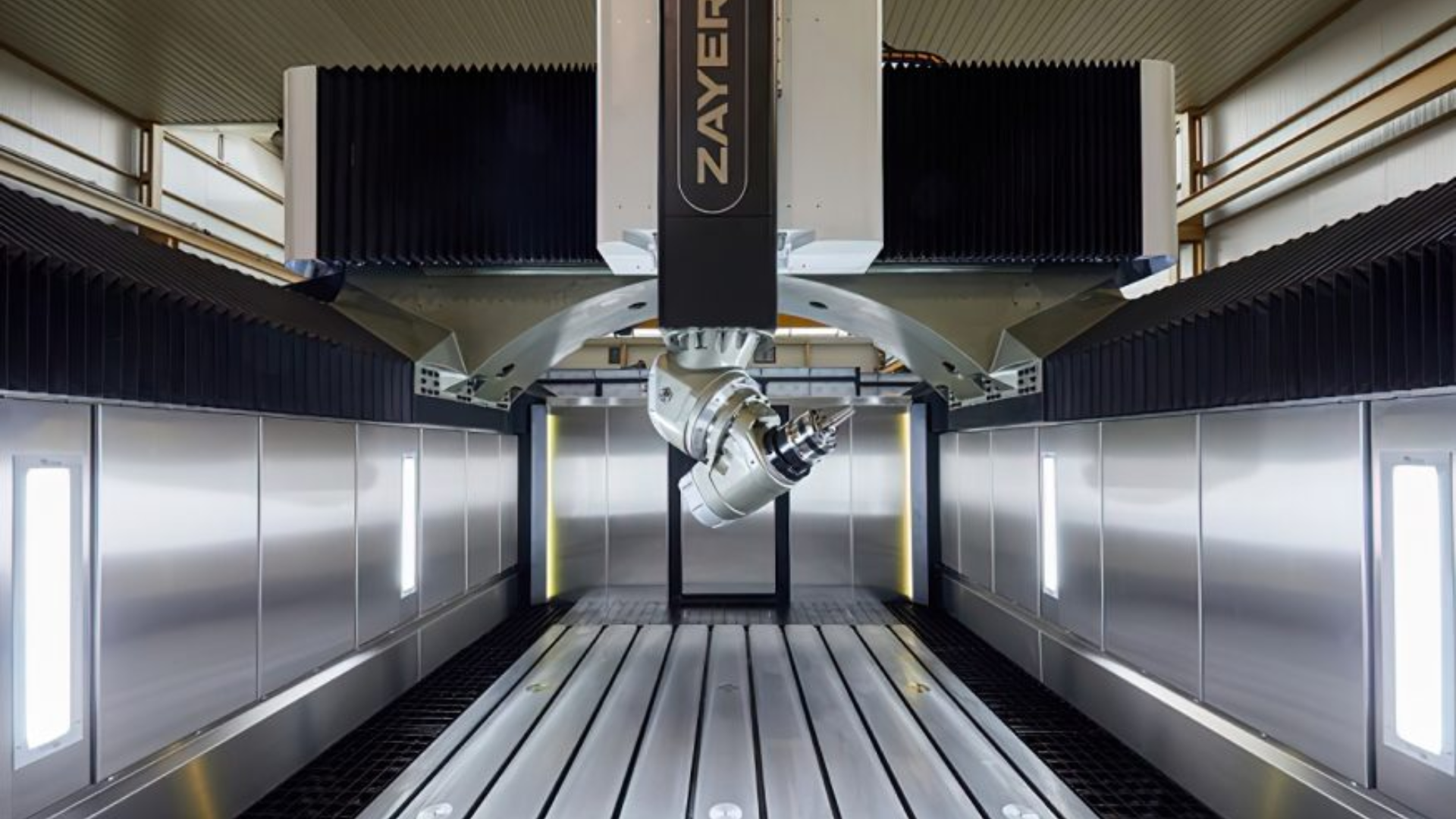
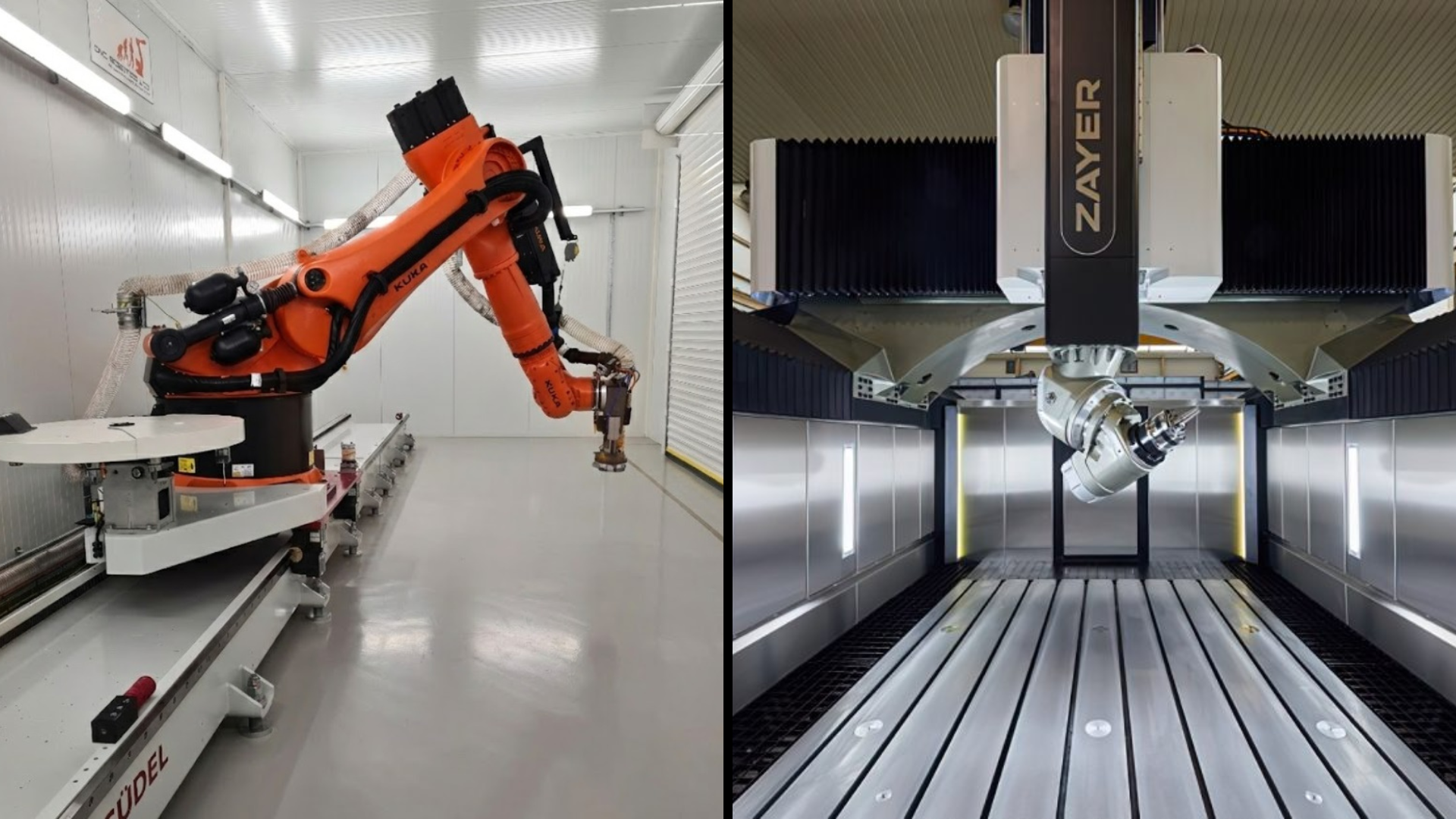
A conventional CNC machine operates on fixed linear axes, moving a spindle or machinig bed in precise increments along those axes. The rigidity of that structure is what gives it accuracy, and for high-tolerance work in metals, it is difficult to match. A CNC robot replaces the fixed gantry with a 6-axis articulated arm, giving it the freedom to approach a workpiece from virtually any angle in a single setup. The CNC Robot is not as inherently accurate as a rigid CNC frame, but modern industrial robots achieve repeatability up to +/- 0.2mm. This accuracy is sufficient for the vast majority of composite, foam, timber, and tooling board applications where micron-level tolerances are not the requirement.
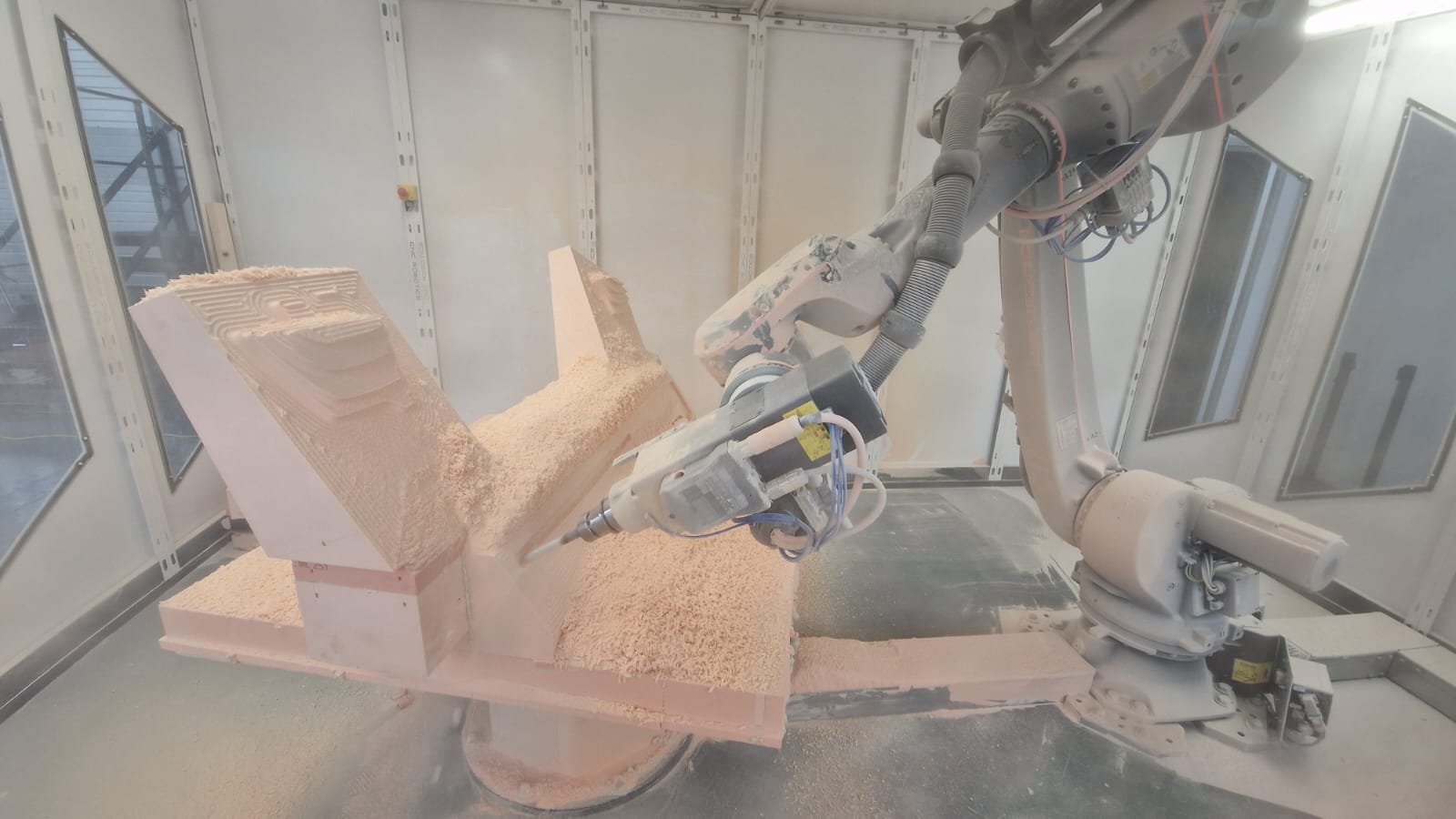
Where the CNC robot wins decisively is on geometry, scale, and flexibility. Parts that would require multiple setups and careful repositioning on a 3-axis CNC machine are completed in a single pass on a robot. The working envelope is larger, and for components that exceed what a standard cell can reach, a robot on a linear track extends that envelope further still. A single robotic cell can cover applications that would otherwise require multiple dedicated machines.
For manufacturers working with composites, large-format components, or complex 3D profiles, the CNC robot is typically the more capable and cost-effective solution. For precision metal cutting to tight tolerances, a conventional CNC machine remains the stronger tool. The most practical question is not which technology is better in the abstract, but which one is better matched to the material, the geometry, and the application at hand.
Related Pages
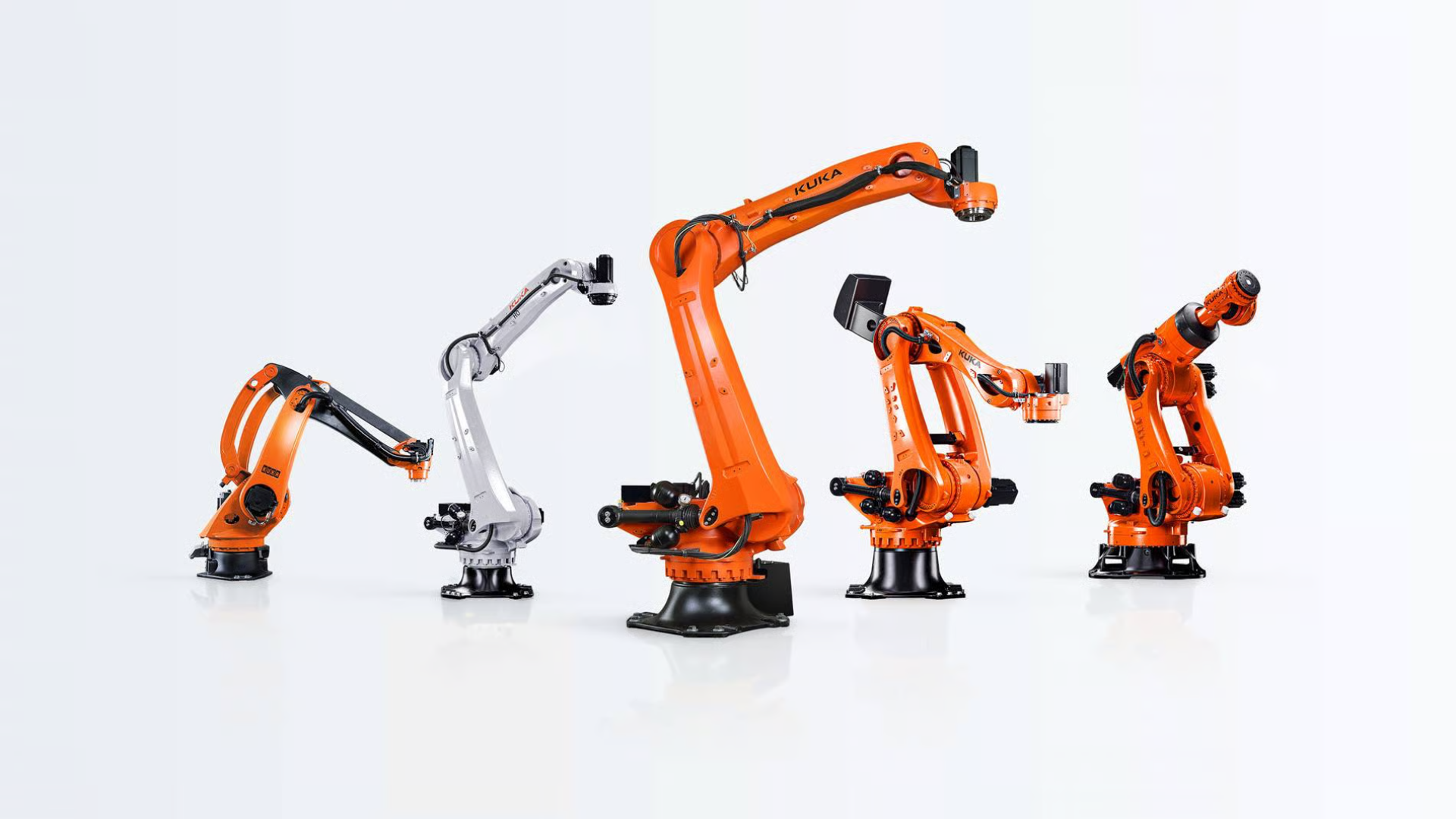
What is a Robotic Machining Cell?
What a robotic machining cell consists of and what separates it from a standard CNC machine.
+ Learn More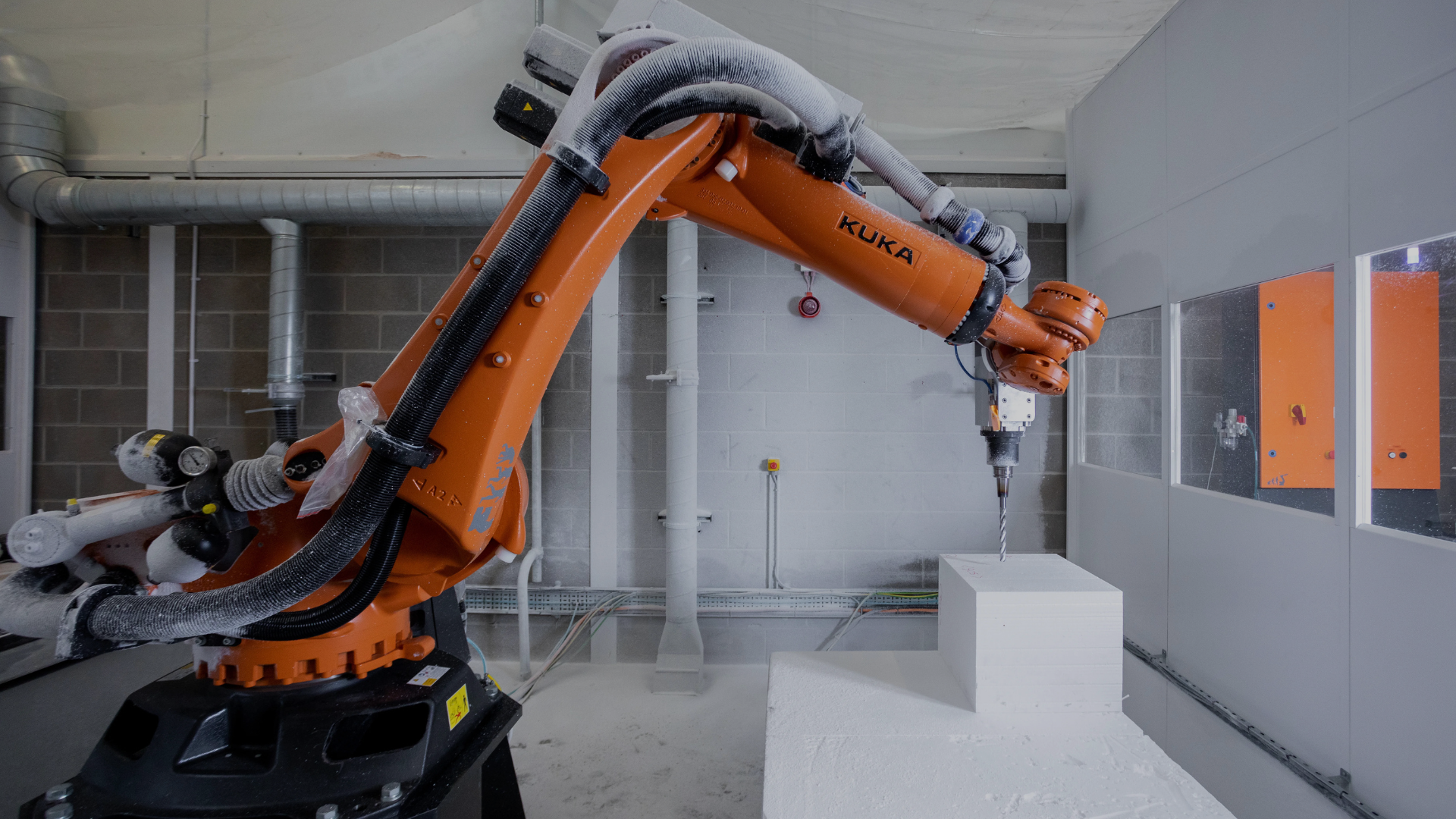
Robotic CNC Machining Systems
Industrial robotic machining cells for composites, metals, and polymers, built around your application
+ Learn More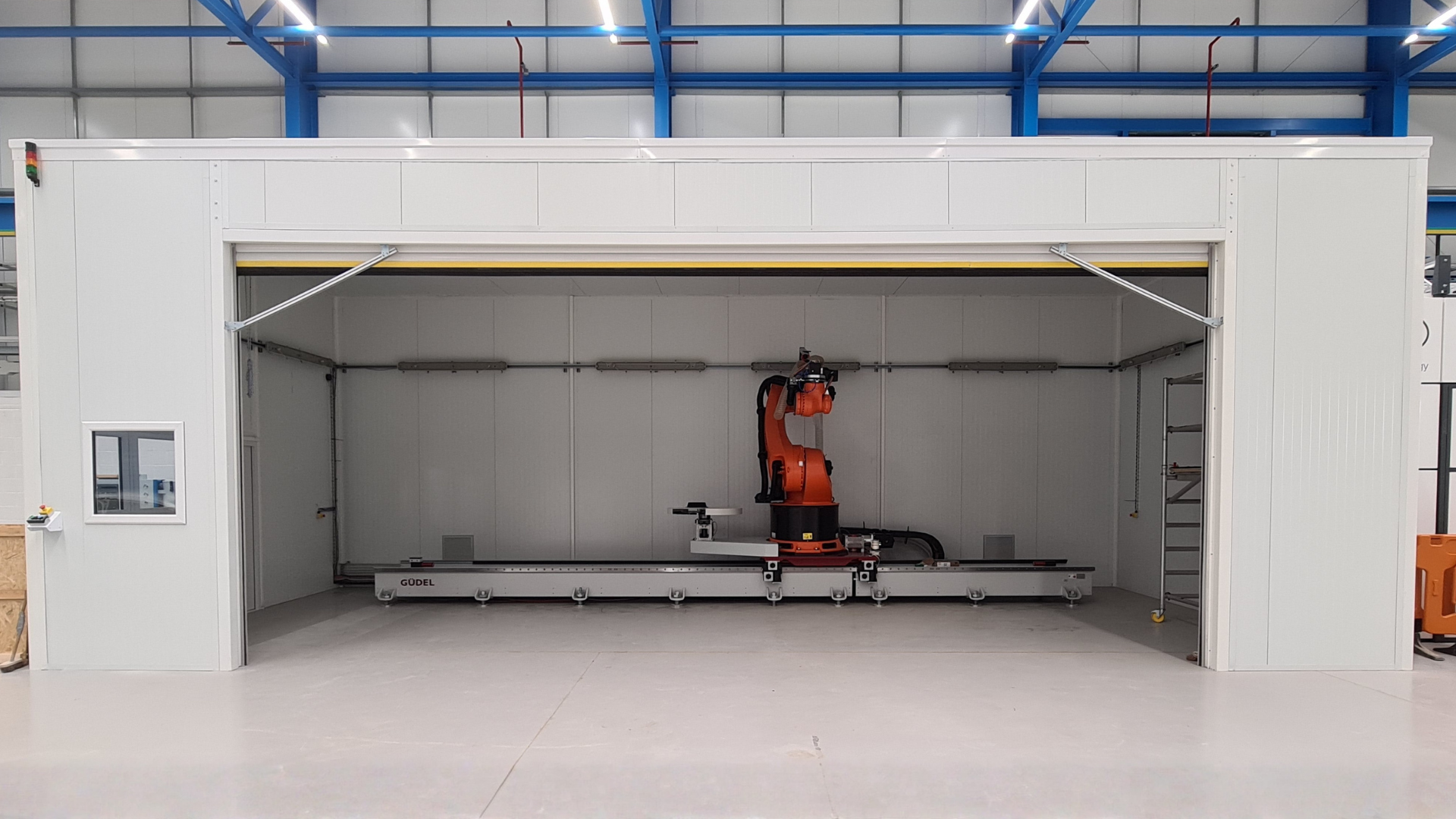
ROBOT CNC MOUNTED LINEAR TRACK
A robot on a linear track extends the working envelope to handle larger parts.
+ Learn More
Leave a Reply