


Robotic Milling: How It Works and Where It’s Used
Robotic Milling: How It Works and Where It Is Deployed
Robotic milling is the use of an industrial robot arm, fitted with a machining spindle, to cut and shape material from a solid block or sheet. The robot follows a cutting path generated directly from a CAD file, executing the same path every cycle with a repeatability of +/- 0.2mm. It is a process that has been adopted across a wide range of industries - not as a novelty, but because the geometry, scale or production requirements of the application demand it.

In aerospace and defence, robotic milling is used to trim composite components for aircraft and vehicles -applications where the part geometry is complex such seats and interior trims. In automotive and motorsport, robot milling produces prototype components, jigs and fixtures as well as composite components, at a pace that supports rapid iteration. In architecture and construction, it shapes foam and polystyrene for precast concrete moulds, blockouts, and decorative formwork, replacing manual carving and hot wire methods that cannot deliver the consistency construction programs require.

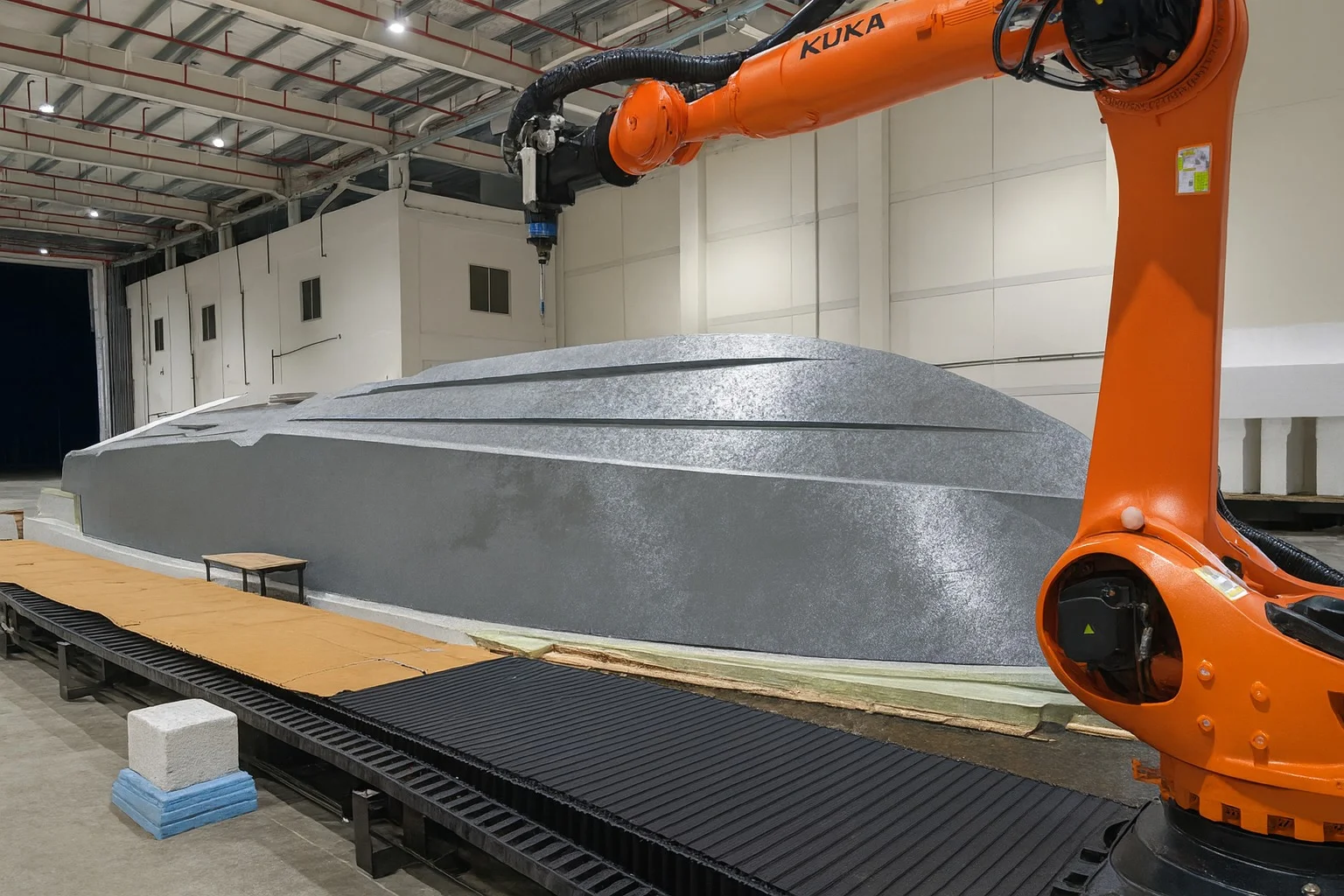
Beyond the traditional manufacturing sectors, robotic milling has found a strong foothold in the creative and prop-making industries, where large-format sculptural pieces, set components and architectural models demand complex 3D surface work at a scale that hand tools and 3-axis CNC machines cannot match. In healthcare and seating, robots cut foam and composite materials into customer specific profiles. In marine, robots are deployed to mill boat hull plugs and tooling, saving on a million pound CNC investment over 12 metres.
Across all of these applications, the common thread is the same: geometry, scale, or volume that makes manual methods impractical and conventional CNC either insufficient or uneconomical. Robotic milling solves for all three, in a single integrated system that moves directly from digital design to finished part.
Applications
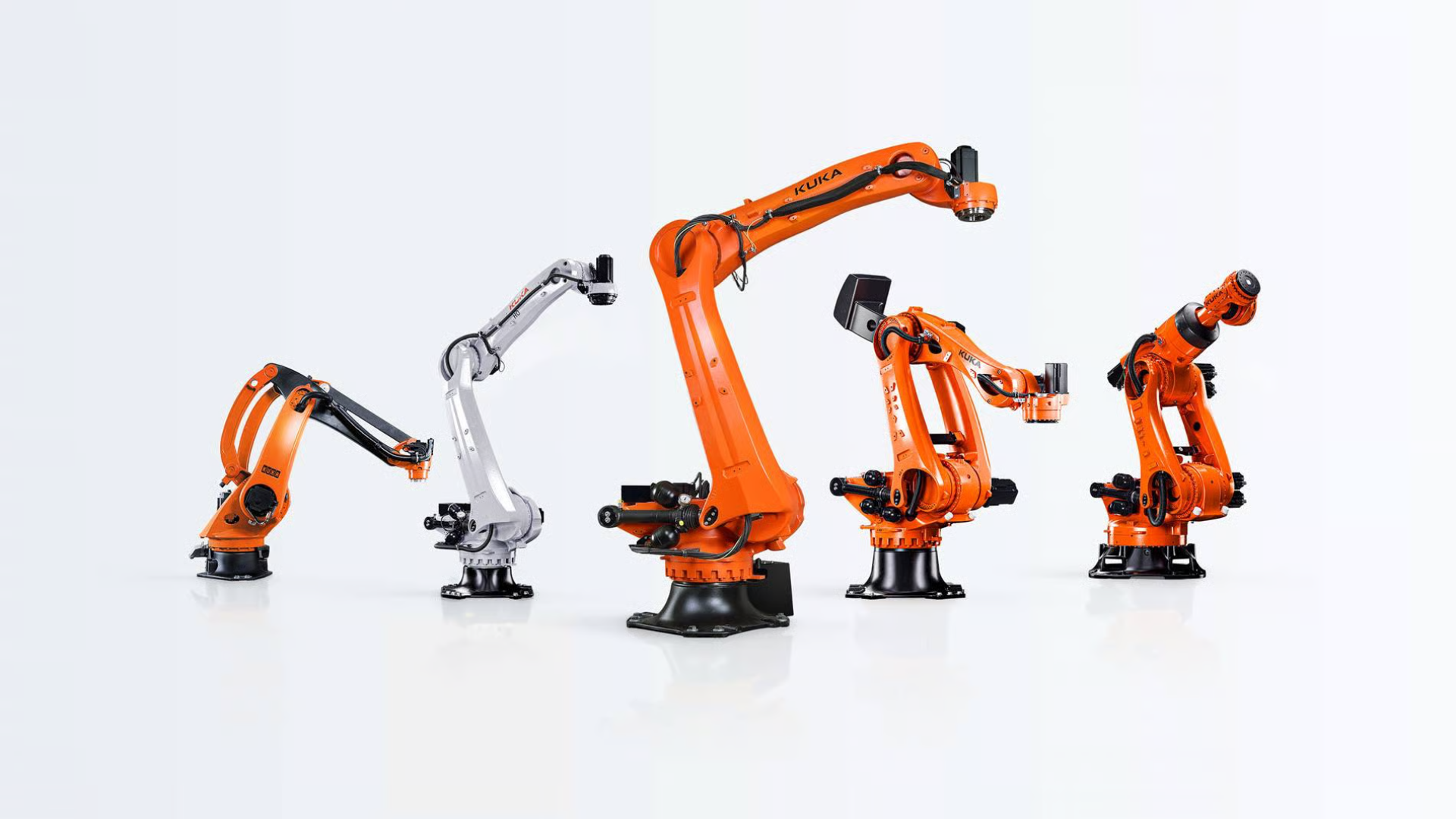
What is a Robotic Machining Cell?
What a robotic machining cell consists of and what separates it from a standard CNC machine.
+ Learn More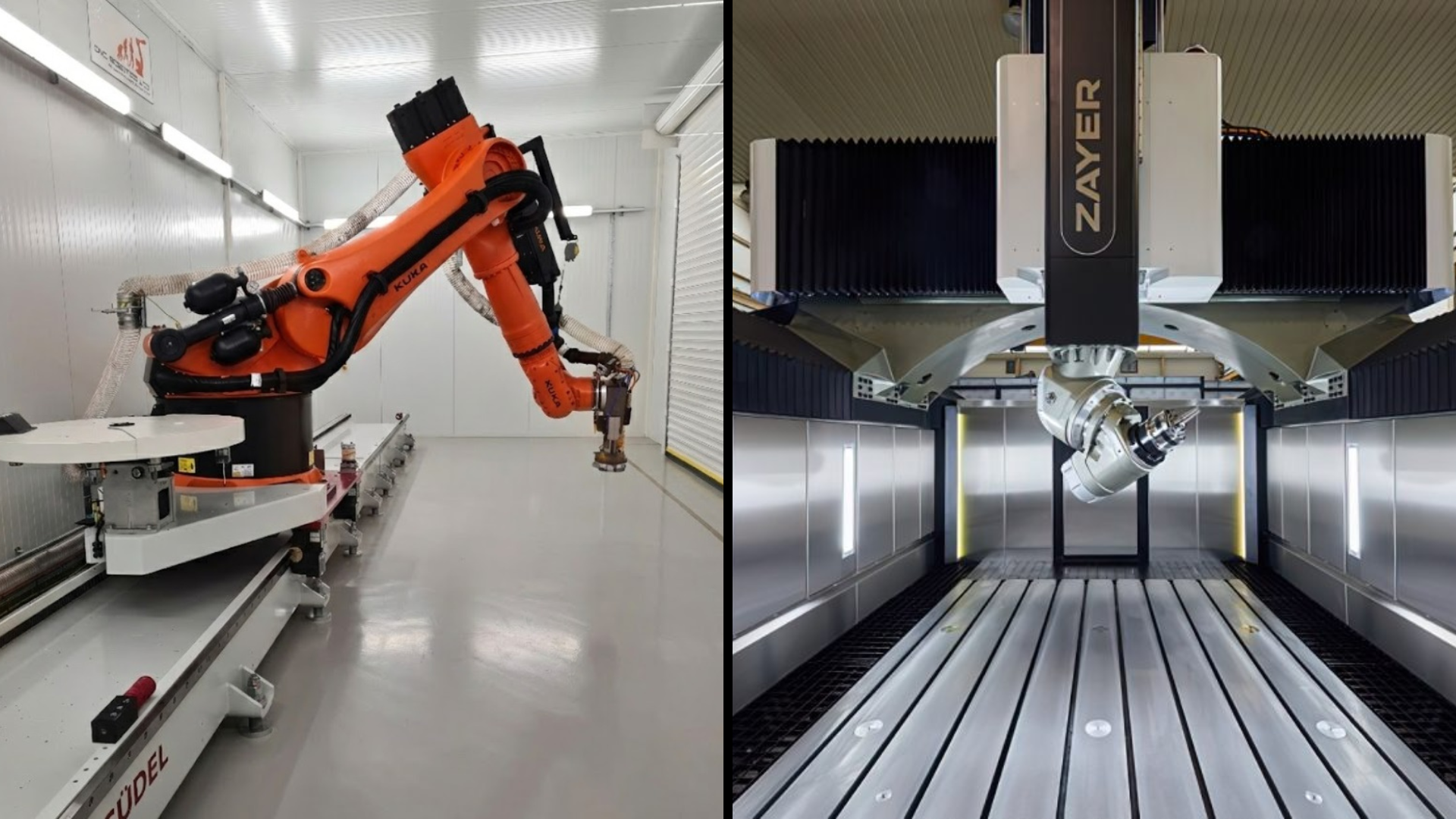
CNC ROBOT VS CNC MACHINE - WHAT'S THE DIFFERENCE?
A comparison of capability, cost, and which application fits which solution.
+ Learn More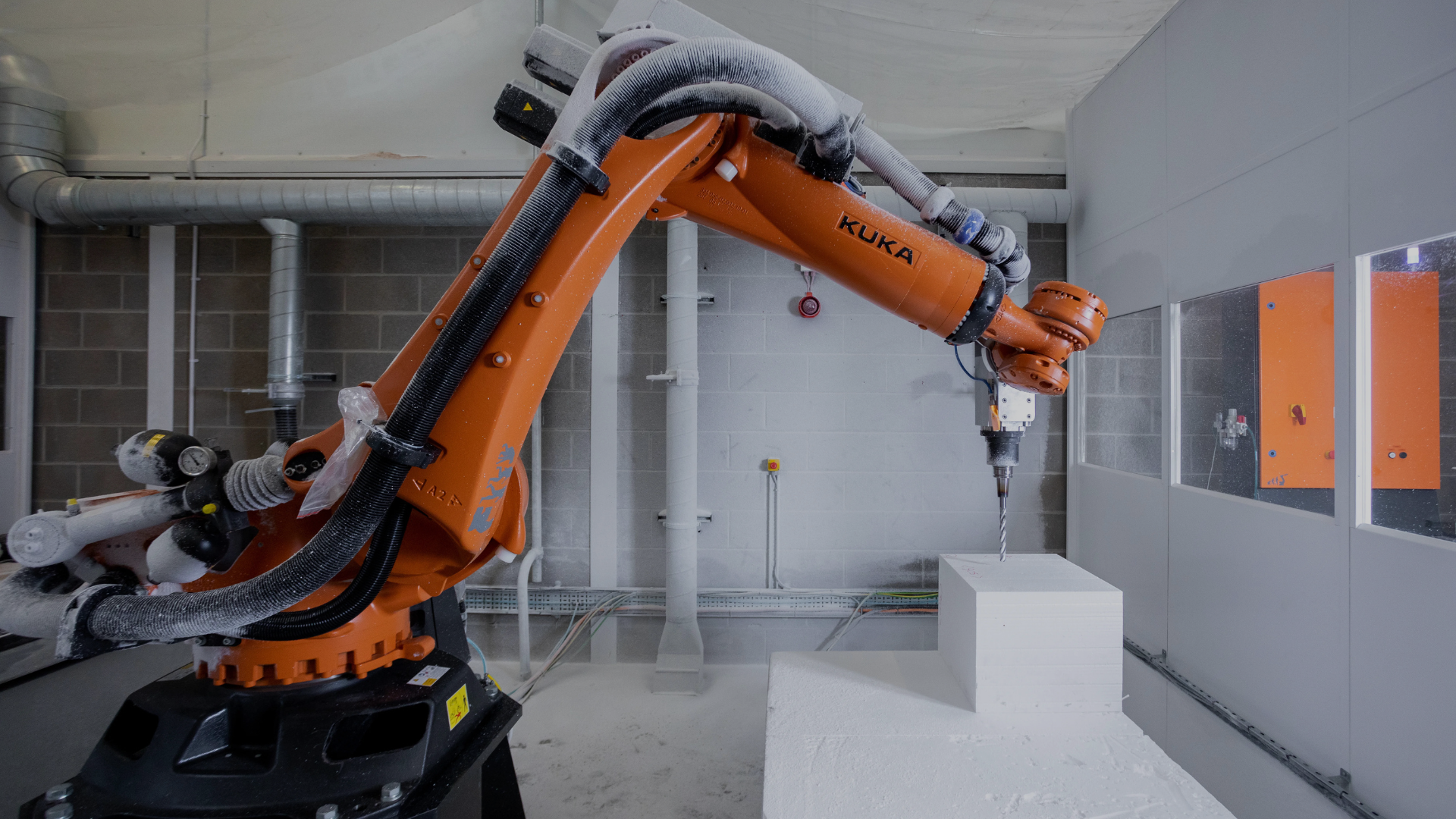
Robotic CNC Machining Systems
Industrial robotic machining cells for composites, metals, and polymers, built around your application.
+ Learn More
Leave a Reply