


Benefits of machining with Industrial Robots vs CNC Machines
Benefits of machining with industrial robots vs cnc machines
Identifying the benefits of using industrial robots over traditional CNC Machines can be a very costly decision. Let us explain the key benefits of Industrial robots over CNC Machines for machining and manufacturing applications.

Flexibility
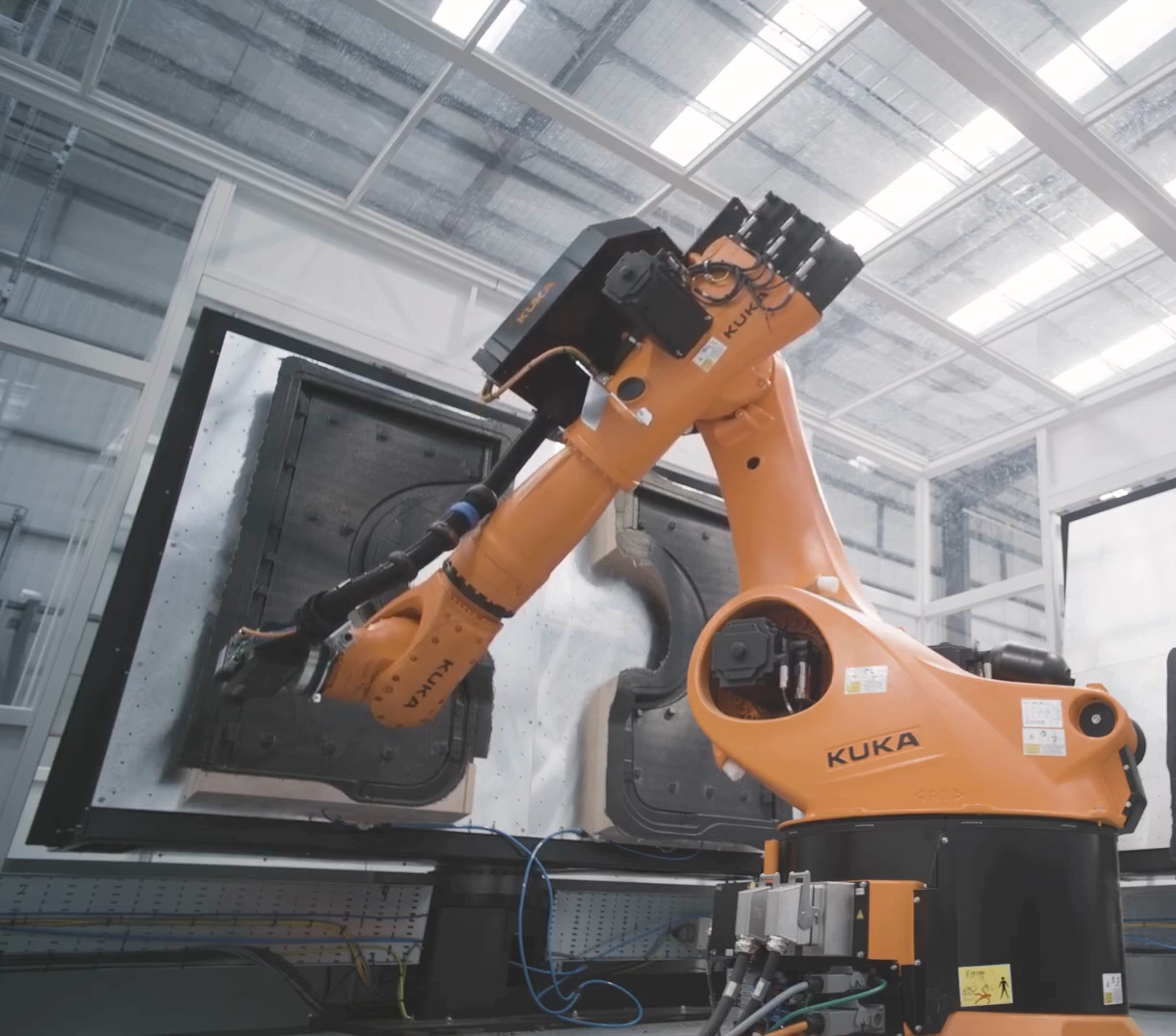
A conventional CNC machine is optimised for a defined envelope. Change the part, change the material, or change the process, and the changeover is time-consuming. Industrial robots can be reprogrammed for a new part geometry far more quickly, making them better suited to manufacturers running mixed-part schedules or frequent product iterations.
The six-axis articulation of a robot arm also unlocks a range of motion that a CNC gantry cannot replicate. A robot can approach the part from any angle without requiring additional fixtures or part repositioning.
A robotic system can also be equipped with an automatic tool changer, switching between cutting tools, routing spindles, or specialist end-effectors within a single programme cycle. Roughing, finishing, and trimming in one uninterrupted run. And if the process changes entirely, the robot can be retooled and redeployed on a different task. That redeployment capability protects the capital investment in a way that a fixed-axis CNC machine cannot.
Productivity
A key attribute of productivity is the cycle time achievable per part. The process used to cut the part primarily governs the cutting speed, so CNC machines and robotic trimming typically will not vary significantly in cut time, but the robot can implement faster tool changes and Tool Center Point (TCP) calibrations.
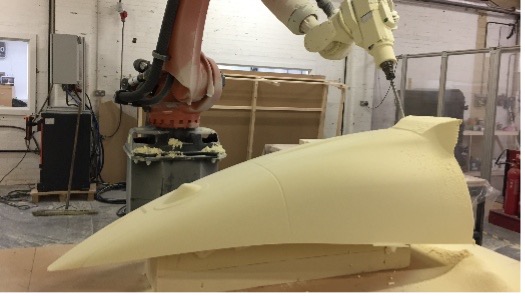
The ability of the robot to reach all around the part, including from underneath the part, can impact the number of set-ups required to trim a part. Customers that have eliminated steps in the set-up required on a CNC machine to process the underside of the part and save the cost of a second part fixture.
Repeatability and quality
Industrial robots execute the same programmed path on every cycle, with a positional repeatability of ±0.2mm. There is no operator variation, no fatigue, and no deviation from the programmed toolpath.
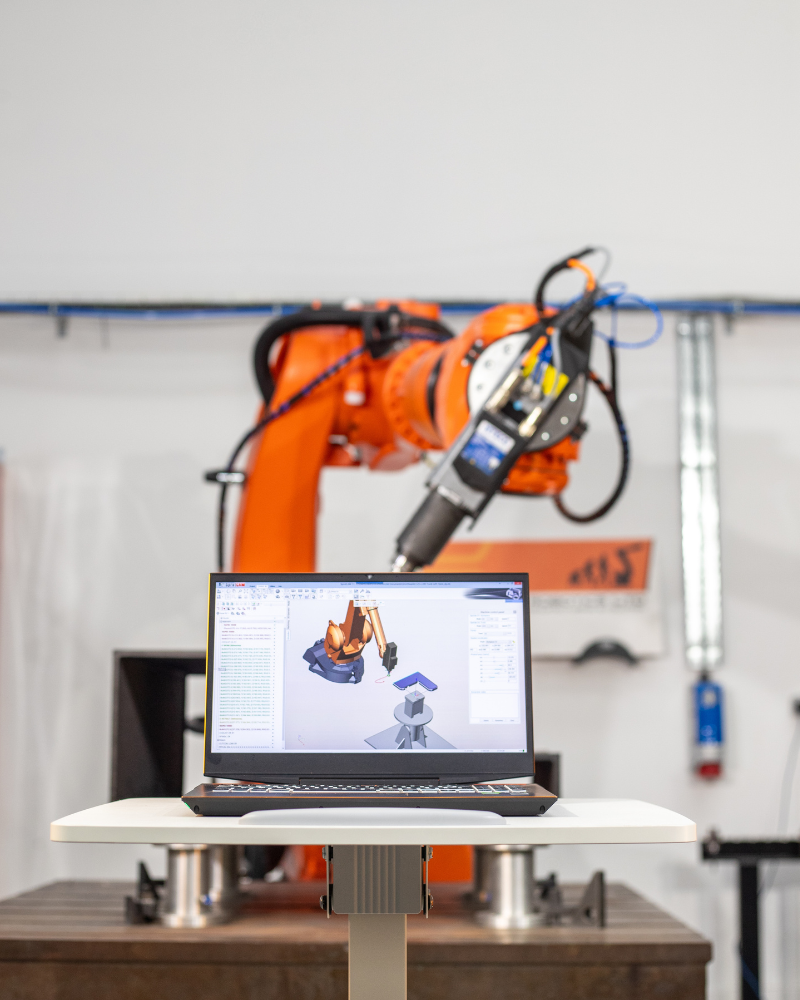
For processes where consistency drives quality; trimming composite components to tight tolerances, for example; that repeatability translates directly into reduced scrap rates and lower inspection overhead. Programming directly from a CAD file also means the digital geometry and the physical output stay aligned. Dimensional changes can be implemented in software and pushed to the robot without retooling.
Cost of Ownership
The capital cost of a robotic machining system is typically lower than a comparable CNC machine at large working envelopes. A fixed gantry CNC at five or six metres costs significantly more to specify and install than a track-mounted robot covering the same range.
Over the service life of the system, the ability to redeploy the robot onto new applications without re-purchasing hardware is a further factor in total cost of ownership that a CNC machine simply cannot offer.

Robotic Machining Systems from CNC Robotics
CNC Robotics designs and supplies bespoke robotic machining cells for industrial applications across aerospace, composites, automotive, marine, motorsport, and creative manufacturing.
Every system is configured around the specific requirements of the application — part size, material, process, and production volume — and integrated with the software, spindle, and safety architecture to make it production-ready from day one.
CNC Robot — A floor-mounted robotic machining cell for milling, trimming, and routing of composite, foam, timber, and soft-metal components. Configured with KUKA industrial robot arm and HITECO electrospindle, with automatic tool changing capability.
CNC Robot Track — A track-mounted robotic system for large-format machining applications. The seventh-axis track extends the robot's working range to cover parts that would be impractical to process on a fixed-cell system.
Cell4Milling — A compact, enclosed robotic machining cell for workshop deployment. Built around a KUKA robot arm and configured for milling and trimming of medium-format components, with a smaller footprint than a conventional machining centre.
All systems are supplied with ENCY CAM software for direct CAD-to-robot toolpath generation, full safety guarding, and ongoing service and support from the CNC Robotics team in Liverpool. For manufacturers evaluating conventional CNC to robotic machining, CNC Robotics offers consultancy, process trials, and system specification support before any purchase commitment is made.
Related Pages
CNC Robot
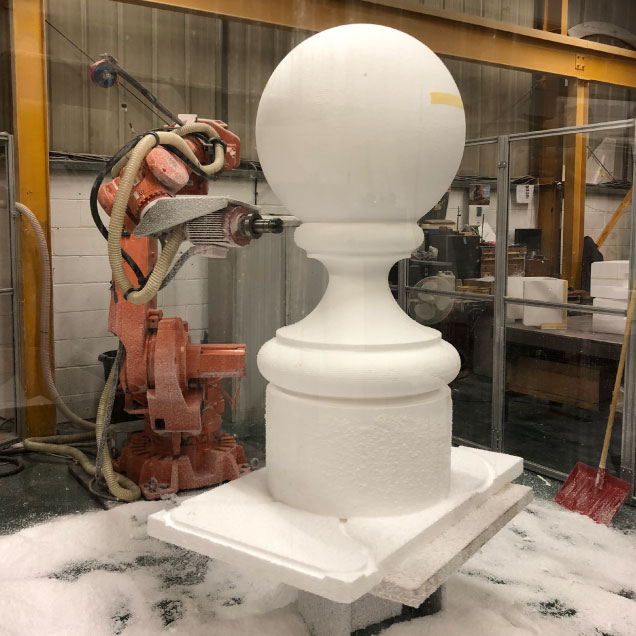
A floor-mounted robotic machining cell for milling, trimming, and routing of composite, foam, timber, and soft-metal components.
+ Learn More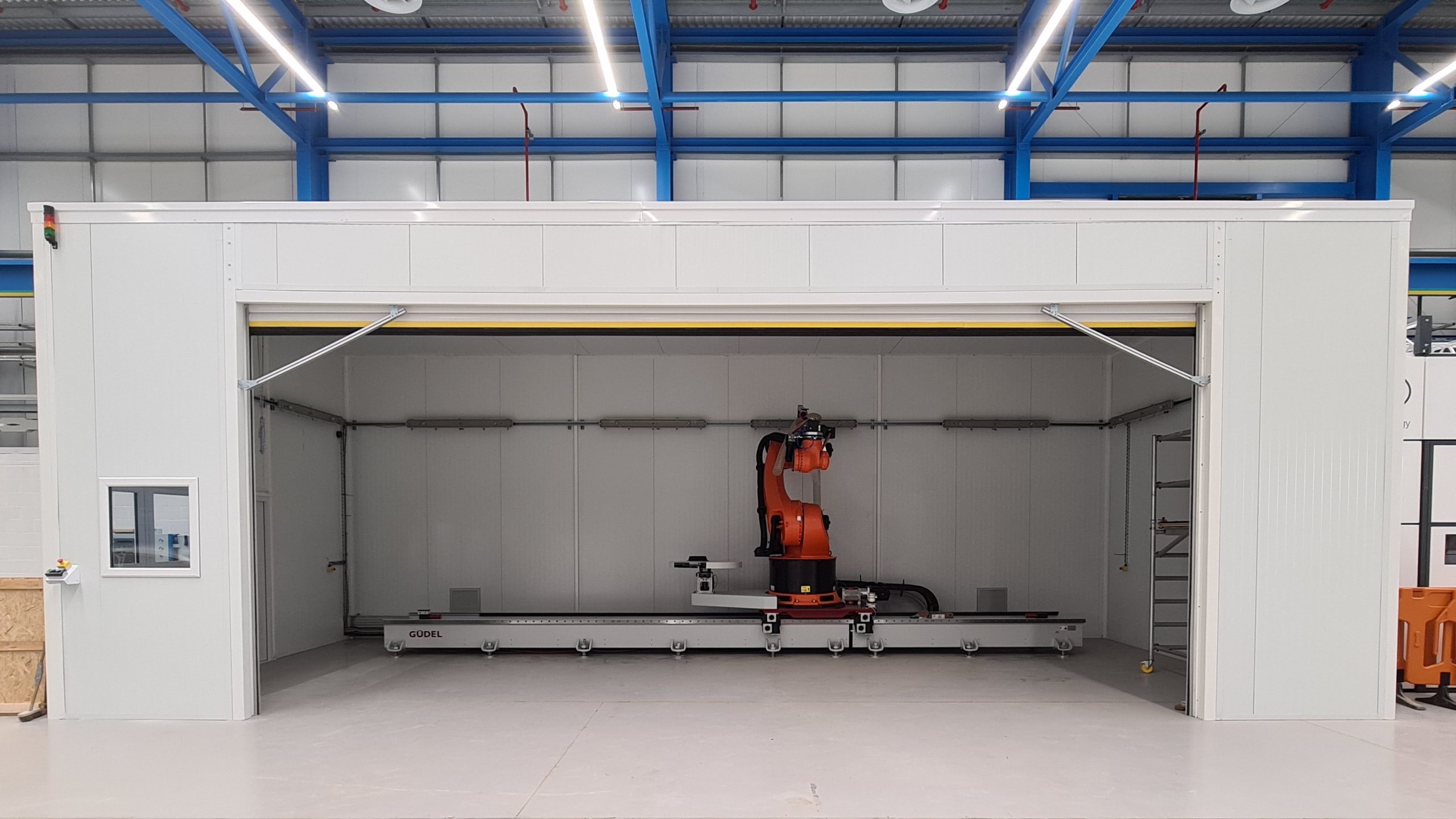
CNC Robot Track
A track-mounted system that adds a seventh axis, extending the robot's working range to cover large-format parts.
+ Learn More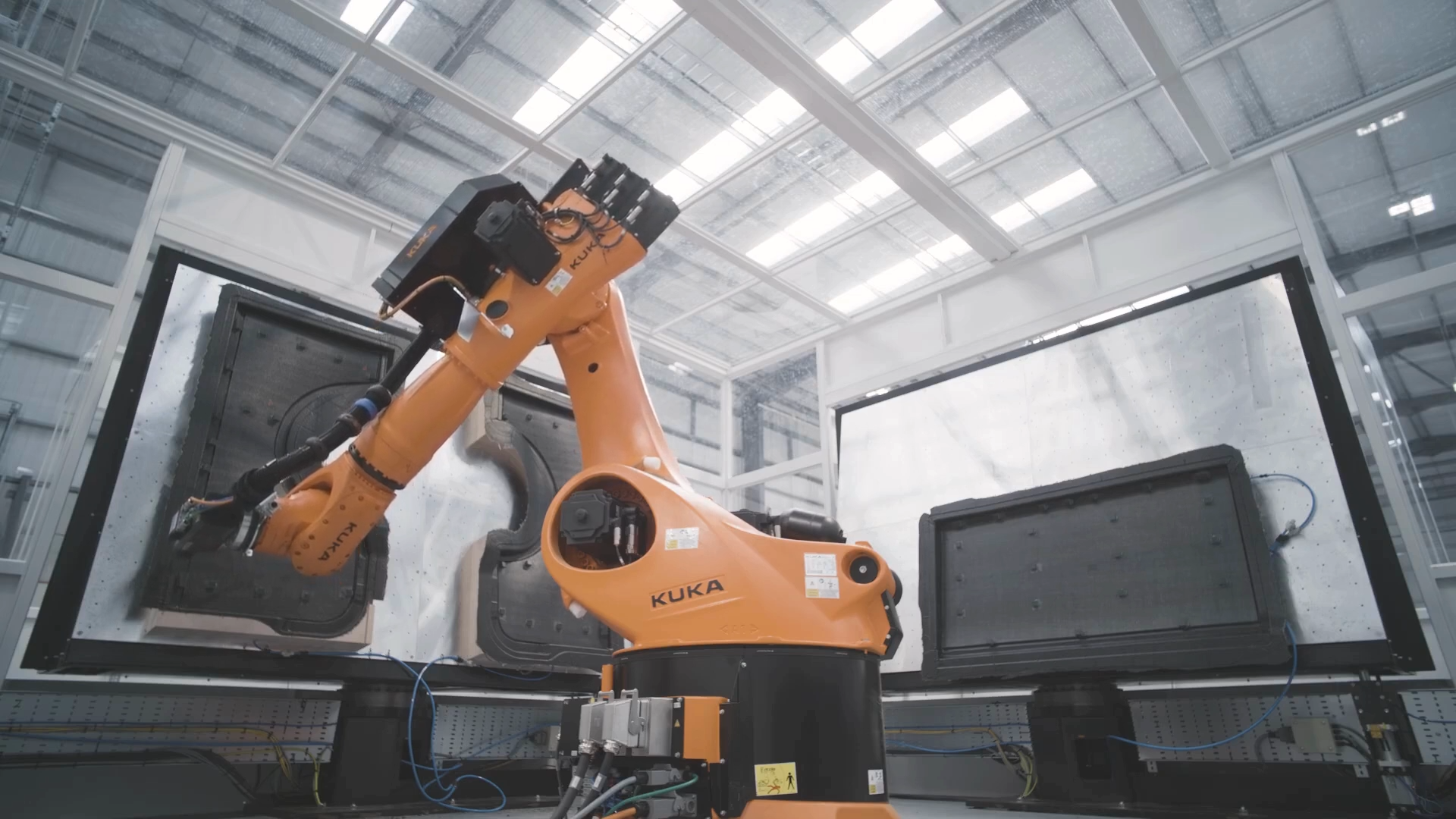
CNC Robot Trimming
A robotic trimming cell built around an A-frame fixture configuration, designed for high-repeatability trimming of composite and plastic parts.
+ Learn More
Leave a Reply