


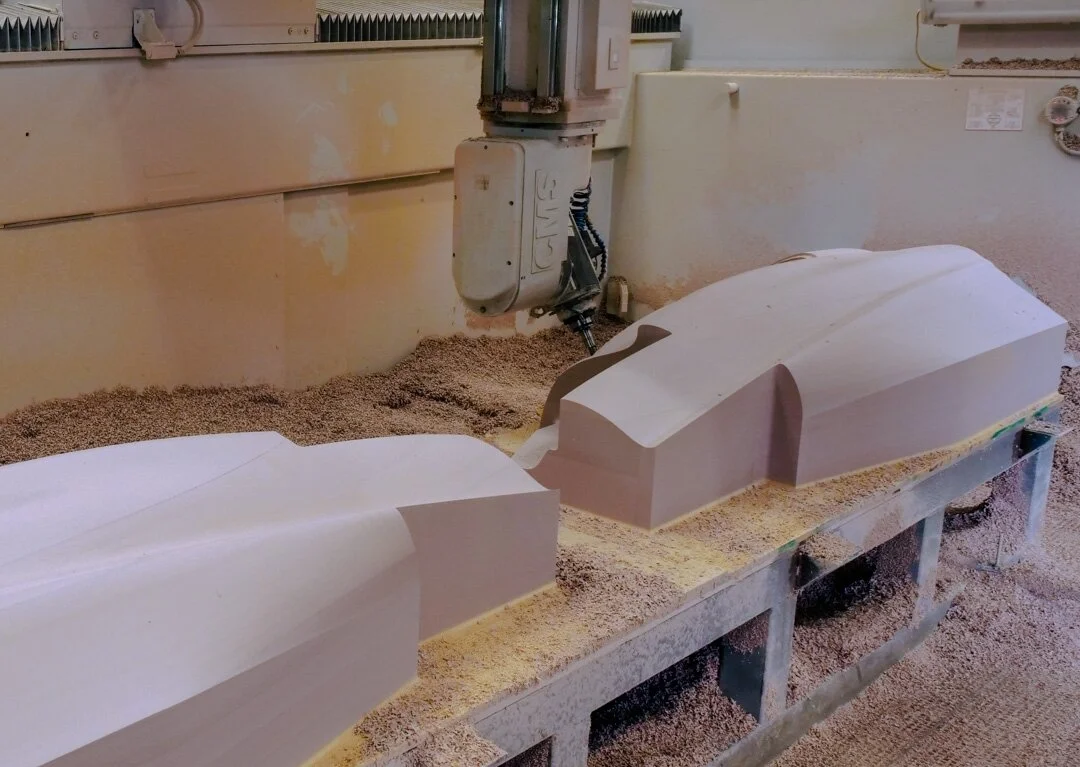
From Tooling Board to Tooling Paste
FROM TOOLING BOARD TO 3D PRINTING TOOLING PASTE
For many manufacturers, tooling board (or epoxy board) is the default for patterns, moulds, and plugs. It’s widely available, easy to machine, and well understood, but it also brings challenges around material handling, storage, and waste. Recent developments in robotic 3D printing with polyurethane tooling paste offer a different approach. By printing near-net shapes and then machining them back to final tolerance, manufacturers can reduce waste, save handling time, and simplify material logistics.
Robotic 3D printing with polyurethane tooling paste offers a fundamentally different approach to composite tooling manufacture. Rather than subtracting material from a block, the Paste Pro system deposits tooling paste directly from a robotic arm, building the near-net shape of the mould or pattern layer by layer. The result is a composite tooling solution that uses only the material needed, reduces waste, and produces a near-net form ready for finish machining, significantly faster than starting from tooling board.
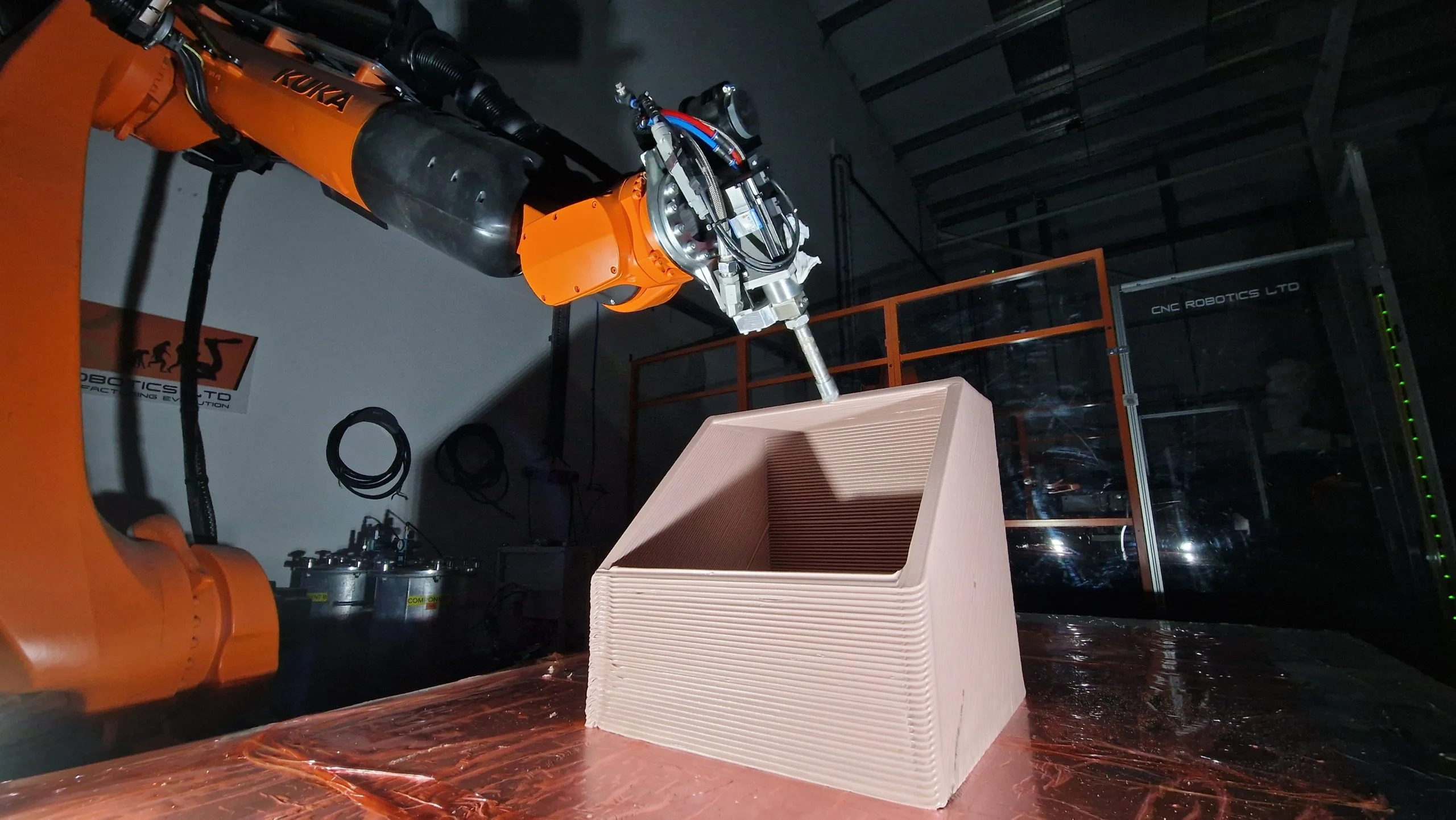
The practical advantages for composite tooling are considerable. Lead times are shorter because the near-net shape is printed rather than sourced and bonded. Design iterations are cheaper because reprinting a modified mould costs a fraction of remachining from board. For manufacturers working in aerospace, automotive, and marine composites, where tooling lead time directly affects programme timelines, 3D printed composite tooling changes what's possible in terms of iteration speed and cost of change.
CNC Robotics integrates the Paste_Pro for composite tooling applications across the UK. Whether you're producing one-off moulds for composite parts or looking to reduce tooling costs across a production programme, the system works alongside your existing machining capability. The near-net printed form is finish-machined to final tolerance exactly as tooling board would be. If composite tooling lead time or material cost is a constraint in your process, it's worth understanding what robotic additive tooling can offer.
Related Pages
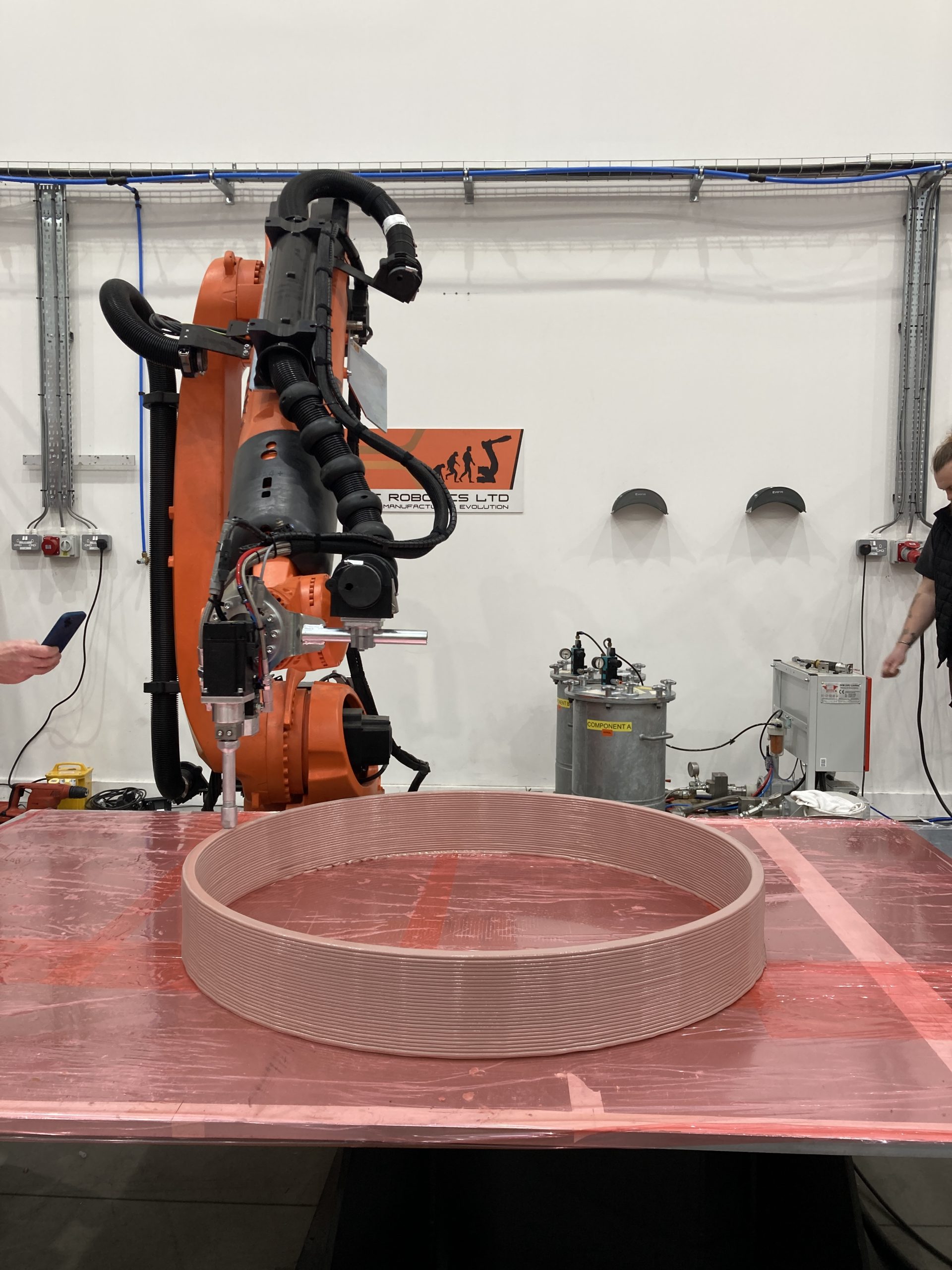
Paste_Pro System
3D print near-net-shape moulds and patterns directly from CAD, with Paste_Pro.
+ Learn More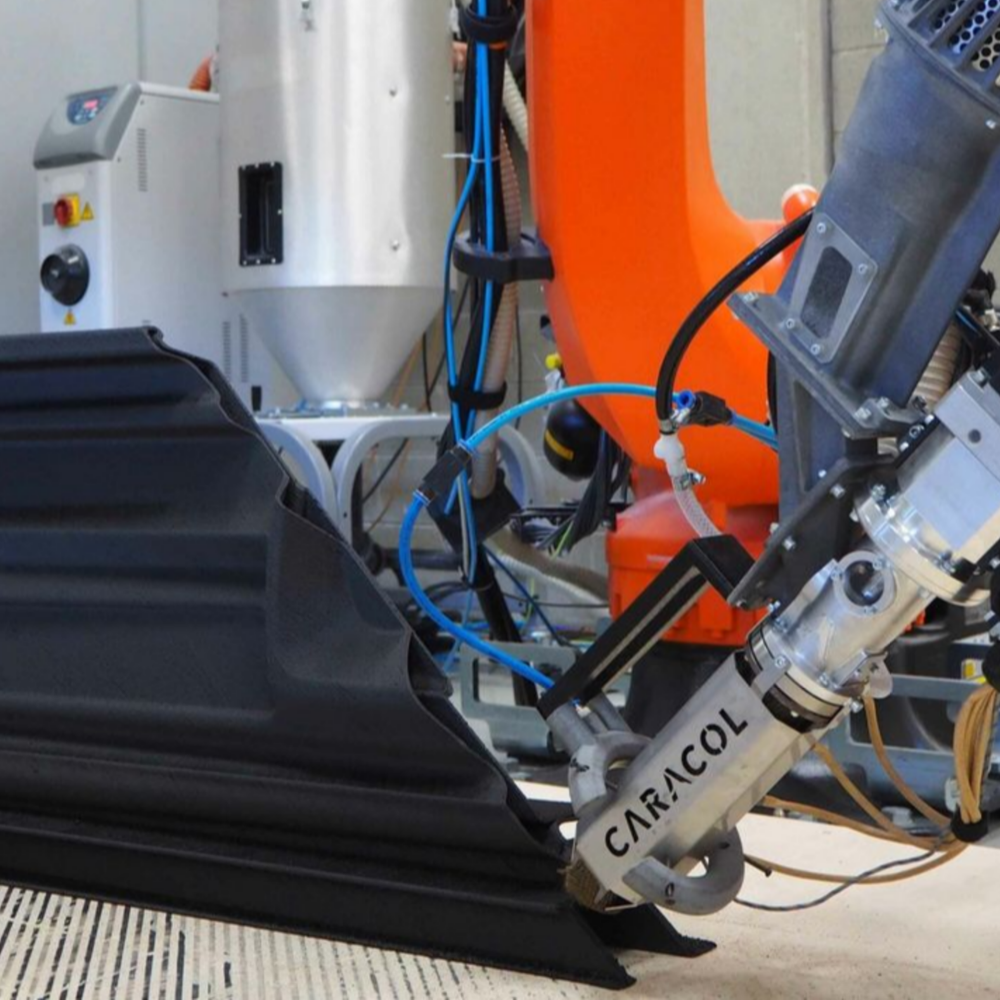
Composite 3D Printing
3D printing with thermoplastics for fast and efficient tooling and component production.
+ Learn More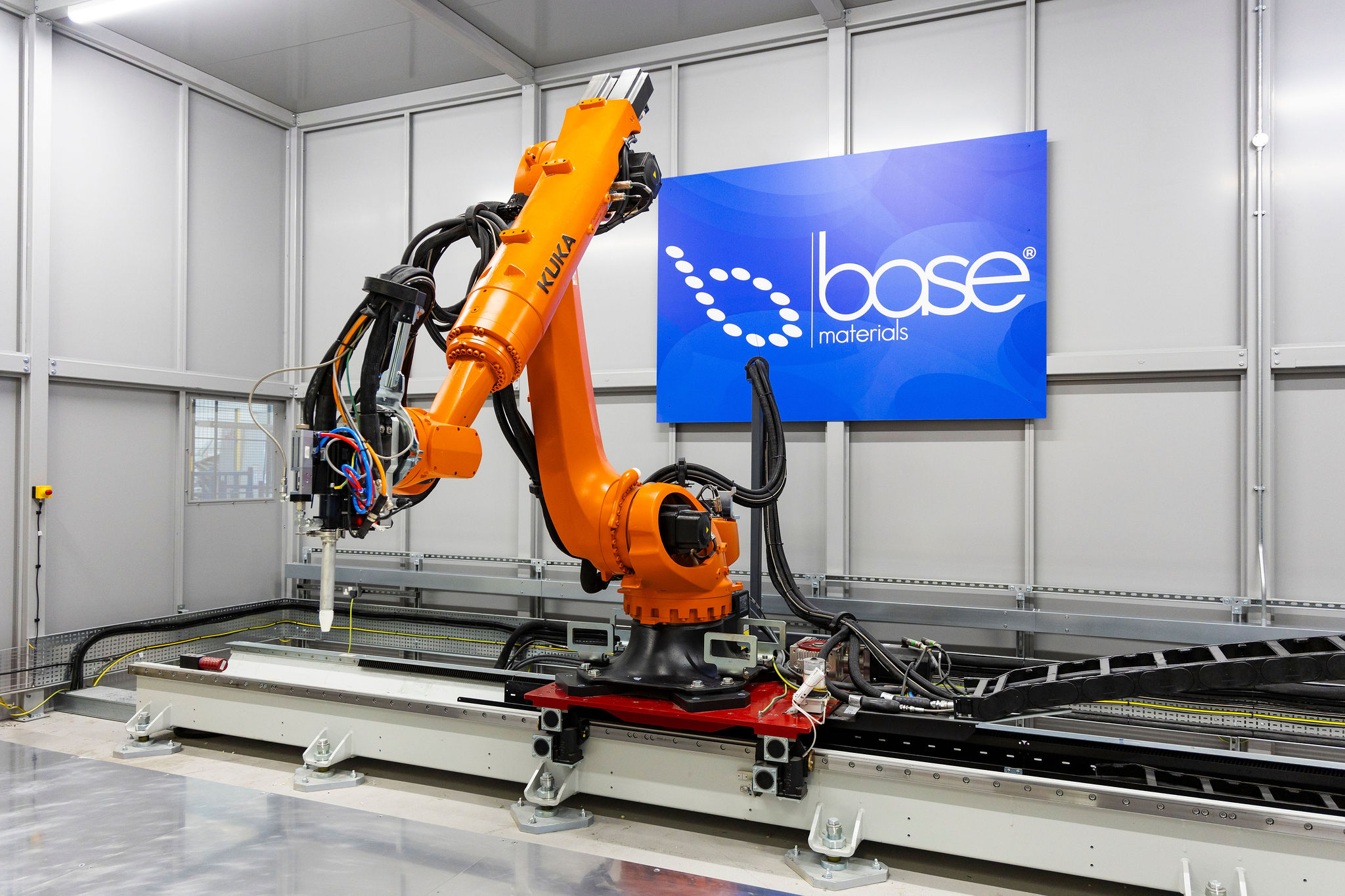
Base Materials
Base Materials have invested in a Paste_Pro system to develop the material and process.
+ Learn More
Leave a Reply